Multilingual Training Video: AI vs. Traditional Production Costs
Aug 10, 2026
1 month ago
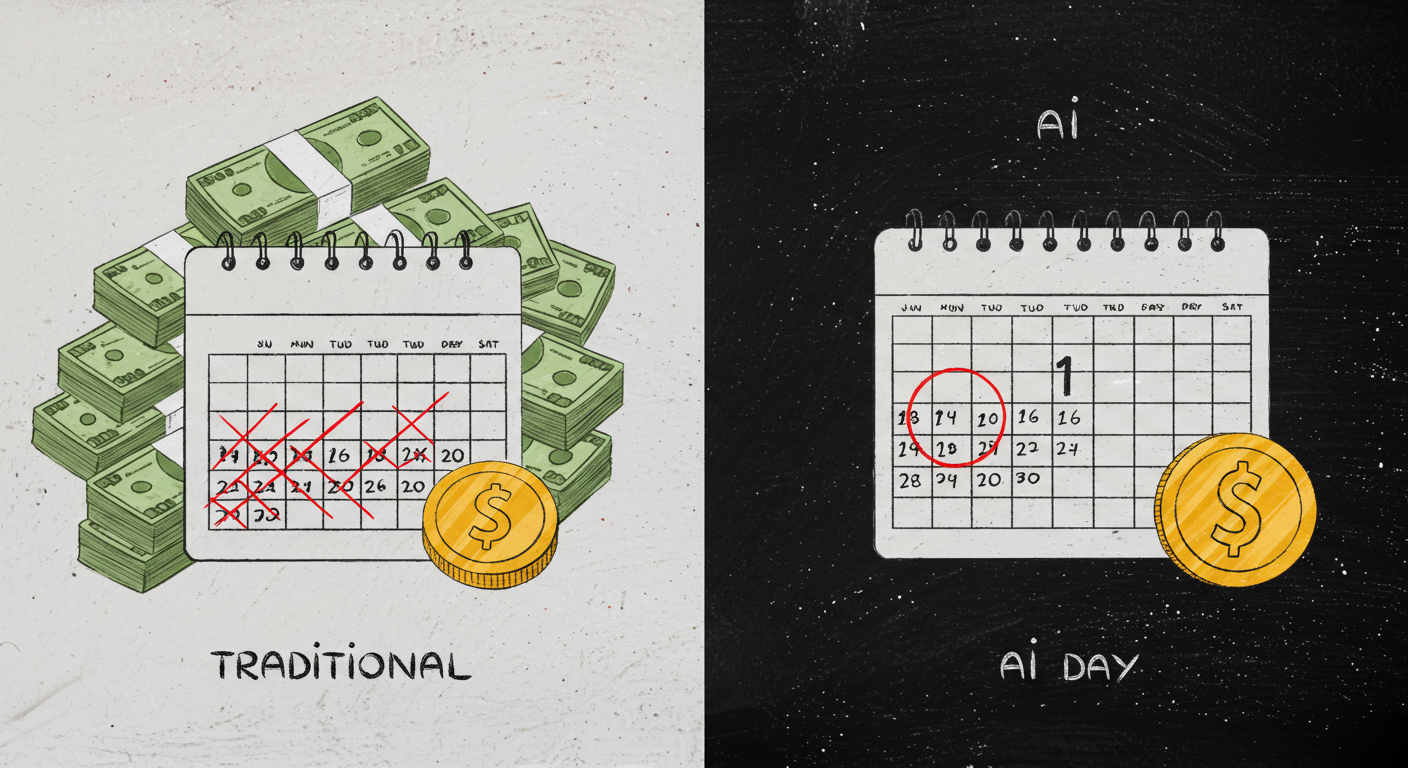
I was speaking with a prospective customer last week, the head of learning at a multinational manufacturing company. He was reeling from a quote he’d just received. The task? To create a single, 10-minute safety compliance video and translate it for their teams in 12 countries. The price tag was nearly €50,000, with a three-month timeline.
He was shocked, but I wasn’t. This is the hidden cost of scaling corporate training. The initial video is just the beginning. The real expense lies in localization. For any company operating globally, creating a consistent and effective multilingual training video library has traditionally been a massive financial and logistical hurdle. But it doesn’t have to be.
The Staggering Cost of Traditional Video Production
Let’s break down that €50,000 quote. Where does the money actually go? Companies that produce corporate videos have to account for a wide range of costs. According to a detailed 2026 pricing guide, even a simple corporate video can cost between $5,000 and $15,000 for a single language. This covers:
- Pre-production: Scripting, storyboarding, and project management.
- Production: A full day of shooting with a professional crew, including a director, cinematographer, sound engineer, and lighting specialists. This also includes costs for equipment rental, location fees, and paying on-screen talent.
- Post-production: Editing, color grading, motion graphics, and sound mixing.
That initial $15,000 gets you one video, in one language. For my customer’s project, the real budget-breaker was the localization.
The Localization Multiplier
Once the English video is finalized, the traditional workflow for creating multilingual versions is painfully manual and expensive. Each language adds a new layer of costs:
- Transcription and Translation: First, the script must be perfectly transcribed and then professionally translated. This requires experts who understand not just the language, but the cultural and technical context of the material.
– Voice-over or Dubbing: You need to hire a new voice actor for each language. Rates for professional voice artists can be hundreds or even thousands of dollars per video. – Re-editing: The newly recorded audio must be synced with the video, which often requires a video editor to adjust timings and graphics for each language version.
Industry-standard rates for professional dubbing can range from $15 to over $75 per minute of video, per language. For a 10-minute video across 12 languages, the math is sobering: 10 minutes x $45/minute (a mid-range estimate) x 12 languages = $5,400. And that’s just for the audio. When you add in the costs of project management and re-editing for each version, the total easily doubles. This is how a $15,000 video quickly balloons into a €50,000 ($54,000) project.
A Radically Different Approach: How AI Changes the Equation
Now, let’s look at this from a different angle. What if you could eliminate 90% of those costs and shrink a three-month timeline into a single afternoon? This is the promise of AI-powered video creation platforms.
Instead of a large crew and expensive equipment, one person can drive the entire process. At Immersive Fox, we’ve seen this firsthand. The initial video creation is already a fraction of the cost. You can upload a script, choose from a library of photorealistic AI avatars, and generate a high-quality video in minutes. There are no cameras, no microphones, and no scheduling conflicts.
But the most significant savings come from the localization process. With a platform built for this, creating a multilingual training video is as simple as selecting the languages you need from a dropdown menu. The AI handles the translation, the voice generation, and the lip-syncing automatically. That expensive, time-consuming localization multiplier disappears. The cost to add another language is negligible.
Suddenly, that project for 12 languages isn’t a massive financial decision; it’s a simple workflow. This approach also makes your training more agile. When a compliance rule changes, you don’t have to go back to a production agency and start the process over. You simply edit the script, regenerate the video, and redeploy it in all languages simultaneously.
Why a Multilingual Training Video Strategy is No Longer Optional
The cost savings are compelling, but the true ROI of a multilingual video strategy goes much deeper. When you train employees in their native language, you see a measurable impact on the business:
- Improved Knowledge Retention: People learn better in the language they are most comfortable with. Complex safety procedures or compliance details are more likely to be understood and remembered, reducing workplace accidents and errors.
- Increased Employee Engagement: Providing training in a native language sends a powerful message of inclusivity and respect. It shows that you value your global team, which can lead to higher morale and lower turnover.
- Guaranteed Consistency: With AI, the core message and tone remain perfectly consistent across every language. There’s no risk of a translator misinterpreting a key phrase or a voice actor delivering the wrong emphasis.
In the past, these benefits were often weighed against the prohibitive costs. Companies had to make difficult choices, often providing native-language training only for their largest markets. Today, that compromise is no longer necessary. You can now do for your team in Poland what you do for your team in Texas, without a second thought about the budget. This is especially powerful when you consider turning existing documents directly into courses, a topic we explored in our recent post on using an AI course creator from a PDF.
The conversation I had with the L&D leader ended on a hopeful note. He realized that the €50,000 quote wasn’t an obstacle; it was a signal that he was using an outdated model. The future of global training isn’t about bigger budgets. It’s about smarter tools.
Have project in mind?
Get in touch with our sales team