AI Onboarding Course: Your Employee Handbook, Reimagined
Mar 30, 2026
6 months ago
I see it all the time. A new hire joins a fast-growing company, excited and ready to contribute. On day one, they’re handed a 100-page PDF – the employee handbook. It’s a massive document, filled with everything from the mission statement to the minutiae of expense reporting. The HR team put hundreds of hours into creating it. And yet, we all know the truth: the new hire will skim it, search it for a few key terms, and promptly forget 90% of it. That document, meant to be the foundation of their journey, becomes a compliance checkbox.
This is the onboarding paradox. Companies invest heavily in creating comprehensive handbooks but fail at the last mile: making the information accessible and memorable. We’ve been conditioned to accept that onboarding is a document dump. But what if it wasn’t? What if you could take that same essential document and transform it into an engaging, interactive, and truly effective learning experience? This is precisely what a modern AI onboarding course can do.
As the CEO of an AI training platform, I’ve worked with dozens of companies struggling with this exact problem. They have the knowledge, but the delivery mechanism is broken. They see new hires making preventable mistakes because the policy was buried on page 74 of a document they saw once. The solution isn’t a better handbook. It’s a complete reimagining of how that information is delivered.
From Static Document to Dynamic Experience
The core problem with an employee handbook is its format. It’s a static, one-way information broadcast. There’s no interaction, no feedback loop, and no way to gauge comprehension. An employee can “read” the entire document without understanding a single policy. They’re passive consumers of information, not active learners.
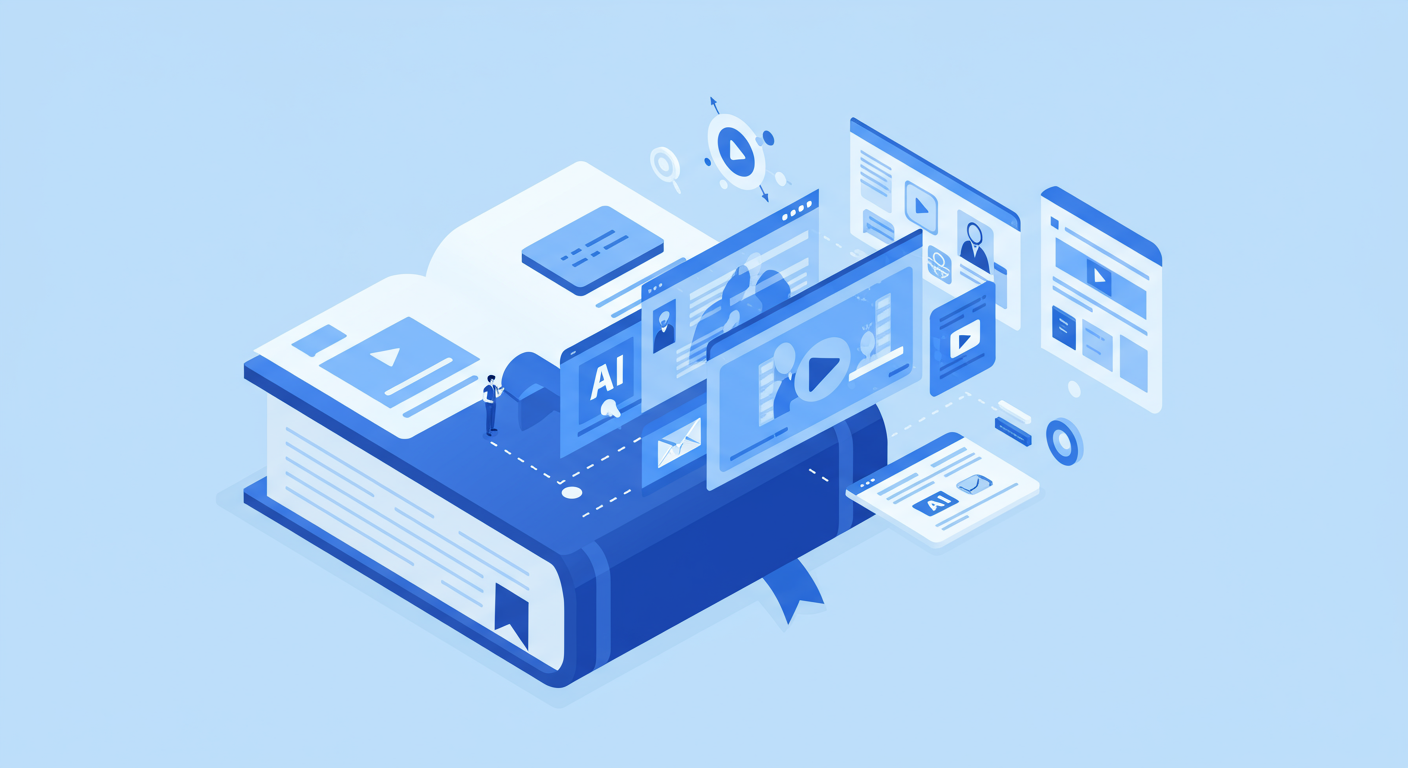
An AI onboarding course flips this model on its head. Instead of just presenting information, it creates a structured learning path. At Immersive Fox, we designed our platform to do exactly this. You can upload your employee handbook (or any other document, like a PowerPoint or PDF), and our AI gets to work. It doesn’t just digitize the pages; it analyzes the content, identifies the key topics, and structures it into a logical course with modules and lessons.
Suddenly, “Company Policies” isn’t a 20-page chapter. It’s a series of short, digestible lessons: one on the code of conduct, one on data security, one on communication guidelines. Each lesson can be brought to life with an AI avatar who explains the concepts in a friendly, conversational tone. It’s the difference between reading a dense legal document and having a helpful colleague walk you through it.
Why an AI Onboarding Course Works: The Science
The move from a handbook to a course isn’t just about aesthetics; it’s about how people actually learn. Cognitive science tells us that active recall and spaced repetition are keys to long-term memory. A handbook offers neither.
This is where AI-driven features become so important. For example, after a lesson on data security, the AI can generate a quick quiz. Not a punitive test, but a knowledge check. If an employee gets a question wrong, the system doesn’t just say “incorrect.” It can re-explain the concept, perhaps using a different example, ensuring the information sticks. This is the foundation of adaptive learning, where the experience adjusts to the individual learner’s needs.
A recent article in Forbes highlighted this, noting that AI can make “new hires feel more welcomed, engaged, and invested from day one.” It’s because the experience is designed for them, not just for the sake of information delivery.
Beyond Comprehension: Building Culture
An often-overlooked failure of the employee handbook is its inability to convey company culture. Culture is about tone, values in action, and the unwritten rules of how people work together. A PDF can state your values, but it can’t demonstrate them.
Using AI video avatars in your onboarding course is a powerful way to bridge this gap. You can choose an avatar that reflects your brand’s personality. The way the AI presenter speaks, the examples they use, the tone they adopt – it all combines to create a sense of your company’s identity. It feels personal and welcoming. You can even clone the voice of the CEO or a team lead to deliver key messages, creating an immediate connection.
This is far more effective than a block of text. It shows you care about the new hire’s experience, which is the first and most critical step in building a positive relationship with a new team member.
How to Build Your First AI Onboarding Course from Your Handbook
The process is more straightforward than many people think. The technology is no longer the barrier. Here’s a simple, practical approach:
- Start with your existing handbook. Don’t try to write something new. Your current employee handbook, whether it’s a Word document, PDF, or a collection of policies, is the perfect source material. It contains the critical information you’re legally and culturally required to share.
- Upload it to an AI course creation platform. A tool like Immersive Fox allows you to simply drag and drop your document. The AI will parse the content, breaking it down into a suggested course structure. You’ll see a list of potential modules and lessons, which you can then edit and refine.
- Review and refine the structure. The AI provides a first draft. As the human expert, your role is to ensure the flow makes sense. You might want to reorder some lessons or combine others. The goal is to create a logical path for a brand-new employee.
- Add interactivity. This is the most crucial step. For each lesson, use the AI to generate a few quiz questions. These knowledge checks transform passive reading into active learning. Focus on the most critical policies – the things a new hire absolutely must know in their first week.
- Bring it to life with video. Instead of just text on a screen, use an AI avatar to present each lesson. This adds a human element and dramatically increases engagement. You can choose from dozens of avatars and over 50 languages, ensuring your onboarding is inclusive and accessible to a global team.
- Publish and share. Once you’re happy with the course, you can publish it with a single click. Now, instead of emailing a PDF, you send new hires a link to an interactive, engaging, and measurable AI onboarding course. You can track their progress, see where they struggled, and know with certainty that they have engaged with the material.
The employee handbook was a solution for a different era. In today’s world of remote teams, information overload, and the need for scalable, consistent training, it’s no longer enough. It’s time to stop handing new hires a book and start giving them an experience. Transforming your handbook into an AI onboarding course is the most effective way to do it.
Have project in mind?
Get in touch with our sales team